non-HITL is not a prediction but a starting point: for asking better questions and looking further ahead.
Your next delivery may arrive inside your fridge, with nobody home.
Today a person has to be at both ends of a delivery: a courier you can identify, and you at the door. Not to do the work, but to carry the trust. When a network can carry that trust, the person is no longer needed in the loop. Delivery is the simplest way to see how.
Illustration · in-home delivery inside a trust network
Our north star
Everything on this site follows from one idea.
Trust is moving from people to networks. Where people are irreplaceable, their value multiplies. Where people are less reliable, machines take over.
01 · The trust network
What does the person in a delivery actually do?
Not the carrying. They answer five questions that every trust network has to answer. These are the five pillars of trust. Here is each one, today and tomorrow.
Today: the courier and youTomorrow: a robot in a trust network
1At the door
Id
IdentityWho is at the door?
TodayA courier in a uniform, from a company you know.
TomorrowA robot with a verified identity, known to the network the way a card is known to a payment network.
Already hereCard networks already give AI agents an identity.
2Coming in
Au
AuthorityMay it come in?
TodayYou open the door, or you don’t.
TomorrowPermission for one door, one time window, one task. It expires when the job is done.
Already here“Least privilege” for agents is now standard practice.
3Doing the job
Co
CompetenceCan it do the job?
TodayThe courier’s experience: the address, the stairs, the fragile box.
TomorrowA robot certified for the task: stairs, doors, the fridge. Homes are built for human bodies, so humanoids fit.
Already hereHumanoids already move 100,000+ totes in a warehouse.
4The proof
Ev
EvidenceDid it really happen?
TodayA scribble on a screen, a photo of the doorstep.
TomorrowEvery step signed and recorded, and the proof sent to your phone.
Already here“Liability follows the logs.”
5If it breaks
Ac
AccountabilityWho pays if it breaks?
TodayThe courier company answers. You complain; they refund.
TomorrowThe network settles who pays, and insurance is priced on the record.
Still missingLiability for machine work is unsettled.
The technology works. It doesn’t pay yet. Humanoids already work in warehouses, but a robot visit still costs far more than a courier’s. In-home delivery arrives when the technology becomes economically available: when a robot delivery costs less than a human one. We place that around 2040. Rules, process, insurance and people have to be ready by then.
A person leaves the loop for four reasons. None of them is about the technology.
Too much to take in, too dangerous, too unpredictable, too hard to verify. Each is a limit of the person, and each is already pushing people out of the loop somewhere today. Click a reason to see where.
01 · Speed and information
More signals than a person can read, in less time than a person needs to decide.
275 alarmsin 11 minutes, for two refinery operators, before the 1994 Milford Haven explosion
Air traffic, control rooms, grids, trading, code, Mars
02 · Hazard
Where a mistake costs a life, the first move is to take the person out of harm’s way.
Mostfront-line casualties in the war in Ukraine are now caused by drones
The battlefield, mine clearance, mining, nuclear and disaster sites
03 · Predictability
Machines that share one plan can work centimetres apart. One person nobody can predict widens every gap.
1 driverthe network can’t predict sets the safety gap for every machine around them
Roads, ports, warehouses
04 · Proof
A person’s word, memory and face no longer prove what happened, or who is speaking.
$25mpaid out in 2024 after a video call in which every other face was a deepfake
Contracts and claims, identity, inspection and audit
01 · Speed and information
Too much, too fast
A person reads a handful of signals at once and needs seconds, often minutes, to decide. Control rooms now produce thousands of signals, and some failures unfold in seconds. Past a certain volume and speed, the person in the loop is either overloaded or only pretending to check.
The human limit
Attention fades over a shift. Under pressure, people fixate on one signal and miss the rest.
Where the human stays
Setting the limits the machines work within, and taking the cases no rule covers.
Time to decide
The world stopped waiting for the person
A person needs tens of seconds to minutes to understand a situation and decide. Markets move in microseconds, grid protection in milliseconds, an alarm flood in seconds. Where events move faster than that, the person in the loop can only watch.
Weakest human pillar: Competence, because a person decides in minutes, not milliseconds.
Air traffic control
One of the most stressful jobs there is
TodayControllers keep aircraft apart by voice and radar, under rules that force regular breaks because attention fades.
Non-HITLEurope’s rules for low-level drone airspace already hand traffic to automated services: no controller could separate thousands of drones by voice. Manned airspace follows, with machines agreeing separation between themselves.
Weakest human pillar: Competence, because a person can’t track that much at once.
Control rooms
The alarm flood
TodayOperators of refineries and plants watch alarm screens. Before the 1994 Milford Haven explosion, two operators faced 275 alarms in 11 minutes.
Non-HITLThe system absorbs the flood and acts within set limits; the operator is told what matters, and why.
Weakest human pillar: Competence, because overload hides the one alarm that matters.
Power grids
A blackout in seconds
TodayOn 28 April 2025 the Iberian grid went from normal to blackout in seconds. Only automatic protection works at that speed.
Non-HITLA grid of solar, wind and batteries is balanced by machines every second. People set the margins and plan the system.
Weakest human pillar: Competence, because a person decides in minutes, not milliseconds.
Trading
The loop that already closed
TodayMost share trading in the large markets is done by algorithms, in microseconds. The trader on the floor left the loop years ago.
Non-HITLAlready here. People moved to setting limits, risk and circuit breakers.
Already non-HITL
Software and back office
The approval nobody really makes
TodayEngineers click “approve” on more AI work than they can check. Past a certain volume, approving is no longer reviewing: it is hoping. And the more they rely on the AI, the weaker the very skills they need to supervise it.
Non-HITLVerification replaces review: the machine proves its own work with tests and records. People look only at what is hard to reverse.
Weakest human pillar: Authority, because a person can’t judge at machine speed.
Space
Where physics removes the human
TodayA signal to Mars takes between 3 and 22 minutes each way. A rover can’t wait for a driver, so it drives itself.
Non-HITLAlready here. People set the goal; the rover plans the route.
Already non-HITL
02 · Hazard
Too dangerous
Here the person is not the weak link; they are the most valuable thing in the loop. So they move out of it: first to a remote control, then, when the radio link itself fails, out of the loop altogether. The war in Ukraine shows both steps, and why this is also where accountability matters most.
The human limit
A body that can be hurt, and a remote link that can be jammed.
Where the human stays
The decision to use force, and the responsibility for it. The more autonomous the machine, the clearer the human answer must be.
The battlefield
Ukraine: the loop cut by jamming
TodayDrones now cause most front-line casualties. Ukraine made unmanned systems a separate branch of its armed forces in 2024, and robot ground vehicles carry supplies and evacuate the wounded.
Non-HITLJamming cuts the link between pilot and drone, so drones get fibre-optic cables, then autonomous guidance for the final approach. The enemy cuts the loop, not the designer.
What must stay human: Accountability, for every decision to strike.
Mine clearance
Every mistake is fatal
TodayUkraine is now one of the most heavily mined countries in the world. Clearing a field by hand is slow, and a single mistake kills.
Non-HITLDrones map the field, armoured machines clear it, and people check the result from a safe distance.
Mining
Nobody in the pit
TodayDriverless haul trucks have run in Australian iron-ore mines for more than a decade, controlled from operations centres far from the mine.
Non-HITLWhole sites run with nobody in the pit. The operator works from a city.
Already non-HITL
Nuclear and disaster sites
Where people can’t go
TodayDecommissioning Fukushima depends on robots sent where people can’t go. Drones and robots go first into fires, tunnels and collapsed buildings.
Non-HITLMachines inspect, cut, carry and search. People plan and decide from outside.
03 · Predictability
Too unpredictable
A network that coordinates thousands of machines can’t plan around someone it can’t predict. Not because people perform badly, but because they perform differently every time. So machines get their own space first: lanes, port zones, warehouse floors.
The human limit
Varies with mood, fatigue and habit, and can’t share a plan in real time.
Where the human stays
Mixed and open spaces, and the exceptions: the blocked road, the strange cargo, the child in the street.
Roads
By 2050, some lanes may be closed to human drivers
Not because people drive badly. A network that coordinates thousands of machines can’t plan around someone it can’t predict. Ports, logistics corridors and night lanes go first.
Weakest human pillar: Competence, because a person is unpredictable.
Ports
Terminals run by software
TodayAutomated container terminals in Rotterdam and Shanghai already run cranes and vehicles from software.
Non-HITLWhole port zones close to people while machines work, and open only for inspection.
Weakest human pillar: Competence, because a person can’t share the plan.
Warehouses
The dark warehouse
TodayHumanoids already move 100,000+ totes in a warehouse, and robot floors are fenced off from people for safety.
Non-HITLNo lights, no people. Maintenance by appointment.
Weakest human pillar: Competence, because a person is unpredictable.
04 · Proof
Too hard to verify
Trust used to rest on a person: a signature, a testimony, a face on a call. Generative AI makes all three cheap to fake, and memory was never reliable. A signed machine record becomes the stronger proof.
The human limit
Forgets, rebuilds memories honestly but wrongly, and can be impersonated.
Where the human stays
Judging disputes and intent: what the record means, not only what it says.
Identity
The colleague who wasn’t there
TodayIn 2024 a finance employee in Hong Kong paid out about $25 million after a video call in which every other participant was a deepfake.
Non-HITLMoney moves on a cryptographic identity, not a familiar face. Agents verify each other before they act.
Weakest human pillar: Identity, because faces and voices can be faked.
Contracts and claims
The signature that no longer counts
TodayA signature and a person’s word settle what was agreed and what happened. Courts already face deepfaked testimony.
Non-HITLA signed machine log becomes stronger evidence than a person’s word.
Weakest human pillar: Evidence, because people forget and can be faked.
Inspection and audit
From a sample to everything
TodayAuditors test samples and inspectors sign forms, both relying on what people say happened.
Non-HITLEvery step is signed as it happens. Audit becomes continuous and complete, not a sample.
Weakest human pillar: Evidence, because a person checks a sample, after the fact.
On four of the five pillars, the person is the weak link.
Start from what people are like, and compare them with a machine inside a trust network, pillar by pillar.
weakerstrongerHperson Nmachine in a trust network
IdentityWho is acting?
HN
Hard to verify at a distance: voices and faces can be faked. A machine carries a cryptographic identity.
AuthorityWhat may it do, where, for how long?
HN
Can be fooled or pressured into going beyond the mandate. A sandboxed machine cannot.
CompetenceCan it do the job reliably?
HN
Unpredictable, inconsistent, tired, slow on routine work. But in the unknown, where no rule exists yet, the person still leads.
EvidenceWhat actually happened?
HN
Forgetful: memory fades and is rebuilt, honestly but wrongly. A signed log doesn’t. “Liability follows the logs.”
AccountabilityWho answers, pays, puts it right?
NH
Here the person is the strong link. A person can answer in court and in conscience; for machines, liability is still unsettled.
Positions are our judgement, for discussion. Each pillar is built from technology, process, regulation, economics and people; see what has to move.
So: the human leaves the loop where a machine is stronger on all five pillars. The human stays, and multiplies its value, where judgement in the unknown and accountability matter most.
Where machines can’t follow, human potential multiplies.
When machines carry the routine trust, the scarce thing is what only people do. The sectors built on it gain the most: each person is amplified by the machines around them.
Judgement in the unknownno rule exists yet
Empathy and carebeing understood by a person
Creativity and tastedeciding what is good
Purpose and valuesdeciding what should be done
Trust between peoplerelationships, reputation
Moral accountabilitysomeone who answers in person
care × machines
Health and care
Machines run the diagnostics and logistics; clinicians spend their time on judgement and the patient.
discovery × automated labs
Science and R&D
One researcher directs thousands of automated experiments.
teaching × personal AI
Education and coaching
AI tutors do the drilling; teachers and coaches do motivation and judgement.
taste × generation
Creative industries and design
Generation is free; choosing what is good becomes the value.
judgement × data
Leadership, strategy, negotiation
Agents prepare and execute; people set direction and carry the deal.
human-made as premium
Hospitality, craft, experiences
When most things are made and served by machines, “made by a person” is worth more.
The question is not whether a job disappears, but which part moves to the network and what the person does instead. Six families of work, with non-HITL at the centre. Click one.
01
Air traffic controllers, grid and plant operators, rail signallers, security analysts, ship’s officers of the watch.
From watching screens → to setting the rules
Speed and information
02
Truck and van drivers, couriers, crane and forklift operators, train drivers, drone pilots.
From driving one vehicle → to running a fleet
PredictabilityHazard
03
Miners, deminers, firefighters, nuclear technicians, offshore and power-line workers, soldiers.
From going in → to sending in
Hazard
04
Auditors, inspectors, claims adjusters, notaries, compliance and identity analysts.
FG Digital exists to understand markets and explain them.
Hugo Gomes
Co-founder, FG Digital
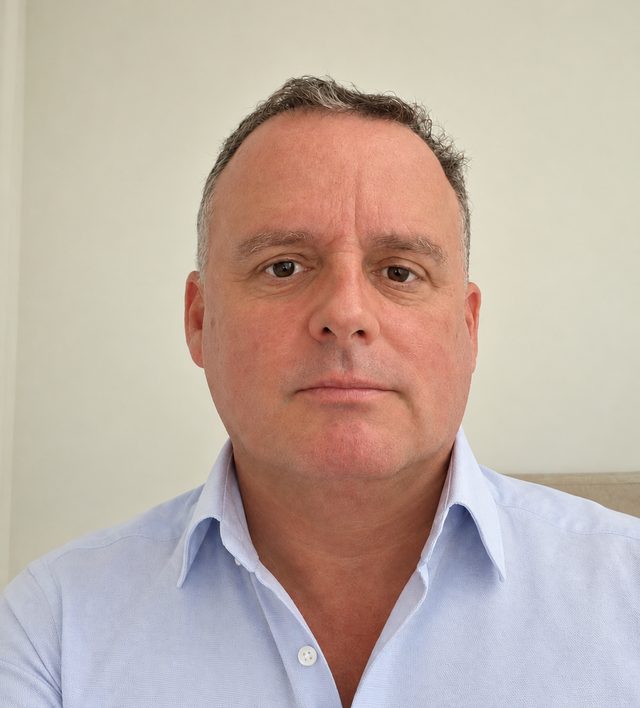
Transformation and programme director. More than 28 years leading transformation in telecoms, energy, logistics and technology across Europe, South America and Africa.
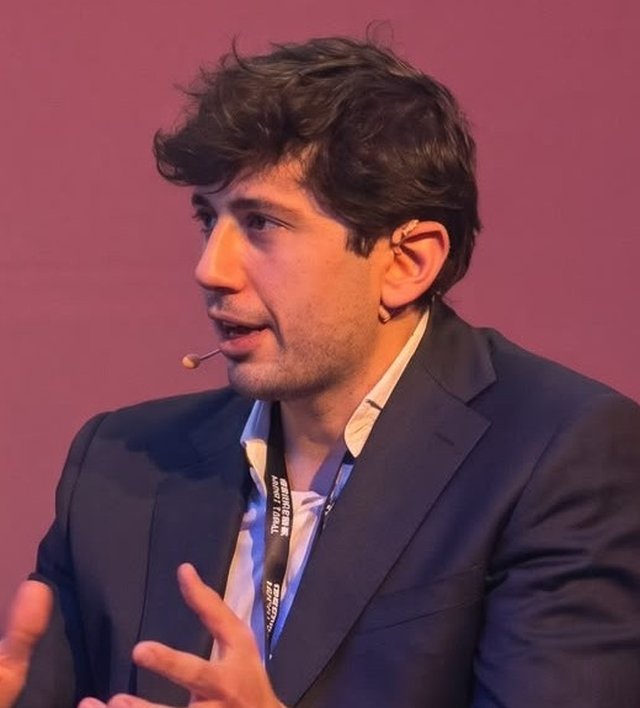
Responsible AI and AI Governance Lead. Driving AI strategy in regulated industries, bridging technology, regulation and business, and making it accessible to everyone.